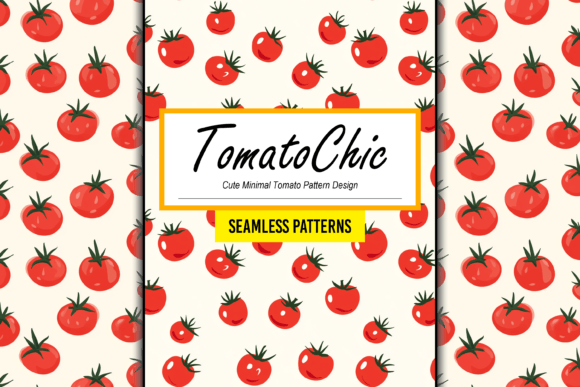
Cute Minimal Tomato Pattern Design Art
In the landscape of digital design assets, finding a balance between visual appeal and functional versatility is often the primary challenge for creators. Cute Minimal Tomato Pattern Design Art addresses this need by offering a seamless collection that merges simple geometric aesthetics with organic subject matter. For professionals ranging from textile designers to digital marketers, the utility of a pattern asset is determined not just by its initial appearance, but by how easily it integrates into broader workflows. This specific set of tomato-themed patterns provides a structured approach to adding warmth and character to projects without overwhelming the viewer with excessive detail.
The core concept behind these designs lies in their reductionist approach. By stripping away complex textures and relying on clean lines and solid color blocks, the artwork remains legible at various scales. This minimalism is crucial for modern design trends, where clarity and direct communication are valued over ornate decoration. The tomato motif itself serves as a versatile anchor; it is universally recognized, evoking associations with freshness, nature, and culinary arts, yet it remains abstract enough to fit within contemporary branding guidelines that favor simplicity.
Key Characteristics and Structural Integrity
A thorough evaluation of any pattern pack requires an examination of its technical construction. The Cute Minimal Tomato Pattern Design Art collection consists of 14 distinct variations, each adhering to a strict 1024 x 1024 pixel resolution. While this dimension may seem modest compared to high-resolution print standards, it is highly sufficient for most digital applications, including web backgrounds, social media graphics, and mobile app interfaces. Furthermore, because the files are provided in seamless formats, they can be tiled infinitely without visible breaks or misalignments, ensuring a professional finish regardless of the output size.
The "seamless" aspect is particularly important for users working with textiles or large-format prints. A poorly constructed tile will result in obvious repeating artifacts that distract the eye and diminish the perceived quality of the final product. These patterns are engineered to maintain continuity across edges, allowing designers to apply them to fabrics, wallpapers, or packaging materials with confidence. The inclusion of watermark-free files upon purchase eliminates the common frustration of having to manually remove branding elements before client delivery, thereby streamlining the production process.
Practical Applications Across Industries
The versatility of this design set allows it to serve multiple sectors effectively. In the realm of fashion and apparel, the minimal tomato pattern can be adapted for summer collections, kitchen-themed merchandise, or sustainable lifestyle brands. The simplicity of the design ensures that it does not compete with other elements of the garment, such as cut or silhouette, but rather complements them. Similarly, in home decor, these patterns can be utilized for throw pillows, table linens, or accent walls, bringing a touch of whimsy without cluttering the space.
Digital creators also find significant value in this asset library. Bloggers and content publishers can use the patterns as background textures for headers, sidebars, or downloadables like planners and journals. The neutral yet charming aesthetic works well with a wide range of color palettes, making it easy to match existing brand identities. For educators and small business owners, the patterns offer a cost-effective way to produce branded materials, such as certificates, flyers, or presentation slides, without the need for custom illustration work.
Stationery design represents another strong use case. Personalized notebooks, greeting cards, and wrapping paper benefit from the tactile feel implied by the tomato imagery. The "cute" aspect of the design appeals to audiences seeking friendly, approachable visuals, which is particularly effective in markets targeting younger demographics or those interested in craft and hobby communities. The ability to resize the original files means that whether a designer needs a subtle texture for a book cover or a bold graphic for a poster, the asset can accommodate the requirement.
Quality Assessment and Usability
Evaluating the quality of digital assets involves looking beyond just the visual style. The Cute Minimal Tomato Pattern Design Art package emphasizes ease of use and consistency. Each of the 14 patterns maintains a cohesive visual language, ensuring that even if a user selects different variations for a single project, the overall look remains unified. This consistency reduces the cognitive load on the designer, who does not have to spend time harmonizing disparate styles.
The provision of commercial use rights adds substantial long-term value. Many freelance designers and agencies operate under strict licensing agreements, and having access to assets that permit commercial application without additional fees or attribution requirements is a significant advantage. It allows businesses to scale their creative output more efficiently. However, it is prudent for users to always verify the specific terms of the license agreement provided by the seller, as conditions can vary.
From a technical standpoint, the 1024 x 1024 resolution strikes a practical balance between file size and image clarity. While it may not be ideal for massive billboard prints without upscaling tools, it is perfectly adequate for screen-based media and standard printing sizes. Users requiring higher resolutions for large-format printing can utilize vector-based upscaling techniques or specialized AI enhancement tools, though the inherent simplicity of the design means that pixelation is less likely to be noticeable even at larger scales.
Target Audience and Strategic Fit
This collection is best suited for individuals and teams who prioritize efficiency and aesthetic harmony. Freelancers managing multiple client projects will appreciate the instant access and ready-to-use nature of the files. Small business owners looking to establish a consistent brand presence across various touchpoints will find the patterns helpful in creating a recognizable visual identity. Educators and parents might also find value in using these designs for classroom decorations or children’s learning materials, given the friendly and non-threatening nature of the tomato motif.
However, it is important to note potential limitations. Designers working in highly corporate or serious financial sectors might find the "cute" aesthetic too informal for their specific needs. Additionally, while the patterns are versatile, they may not suit projects that require intricate storytelling through detailed illustrations. The strength of this asset lies in its subtlety; it enhances rather than dominates. Therefore, it is most effective when used as a supporting element rather than the primary focal point of a design.
Conclusion on Value and Implementation
Ultimately, Cute Minimal Tomato Pattern Design Art offers a reliable and aesthetically pleasing solution for a variety of creative endeavors. Its combination of seamless tiling, commercial licensing, and minimalist charm makes it a practical addition to any designer’s toolkit. By providing high-quality, watermark-free files that are easy to implement, the collection supports a smooth workflow from concept to completion. Whether applied to digital screens, printed textiles, or personal stationery, these patterns deliver consistent results that align with modern design sensibilities. For those seeking to add a touch of organic warmth to their projects without compromising on professionalism, this set presents a compelling option worth considering.